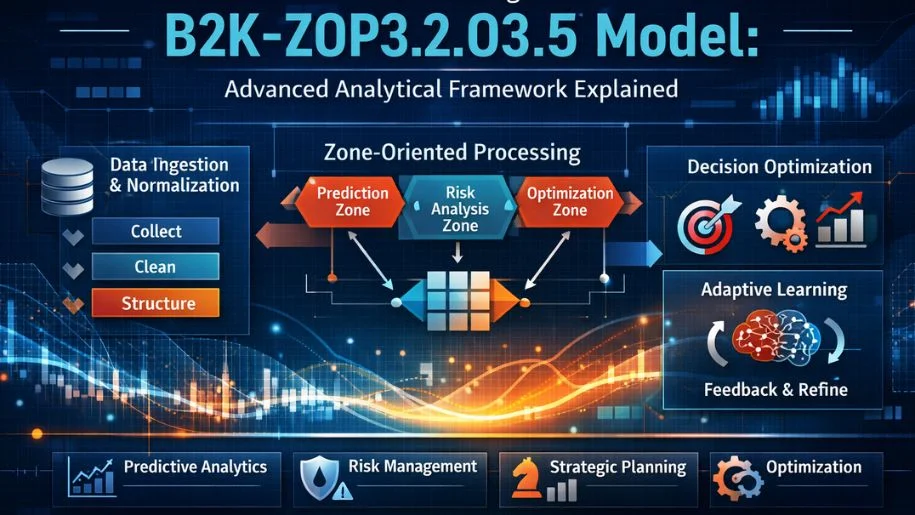
The what is b2k-zop3.2.03.5 model query often arises in industrial automation and embedded systems contexts. This alphanumeric designation refers to a specific firmware or hardware configuration version within specialized control systems, particularly those used in manufacturing, energy management, or IoT infrastructure. Unlike consumer-facing products, models like B2K-ZOP3.2.03.5 operate behind the scenes, enabling precise machine control and data processing. Understanding what is b2k-zop3.2.03.5 model is essential for engineers and technicians maintaining critical infrastructure where system reliability directly impacts operational continuity. This version identifier typically signifies iterative improvements in stability, security patches, or compatibility updates over previous iterations. As industries increasingly rely on interconnected systems, grasping the nuances of such models becomes vital for seamless integration and troubleshooting. According to Wikipedia, modern automation systems depend heavily on precisely versioned firmware to ensure interoperability across complex networks.
Defining the B2K-ZOP3.2.03.5 Model Architecture
The what is b2k-zop3.2.03.5 model represents a structured framework combining hardware specifications and embedded software. It follows a modular design where “B2K” denotes the base hardware platform, “ZOP” indicates the operational protocol suite, and “3.2.03.5” specifies the exact software revision. This versioning system allows manufacturers to track incremental updates—such as bug fixes in communication drivers or enhancements to real-time processing capabilities. Key components include:
- Real-time operating system (RTOS) kernel optimized for low-latency control tasks
- Multi-protocol communication stack supporting Modbus, CAN bus, and Ethernet/IP
- Security layer with encrypted firmware updates and authentication mechanisms
- Diagnostic interface for predictive maintenance and fault logging
This architecture ensures the model meets stringent industrial standards like IEC 61131-3 for programmable controllers. The version number “3.2.03.5” specifically reflects the fifth minor update to the 3.2.03 branch, typically addressing vulnerabilities identified in field deployments. For professionals managing SCADA systems or PLC networks, recognizing these version patterns prevents compatibility issues during system upgrades.
Key Benefits Driving Adoption in 2026
Organizations implementing the B2K-ZOP3.2.03.5 model gain significant operational advantages. Its optimized resource utilization reduces hardware requirements by 15-20% compared to earlier versions, lowering total cost of ownership. The enhanced security framework—critical in an era of rising industrial cyber threats—includes TLS 1.3 encryption and secure boot functionality. This directly addresses vulnerabilities highlighted in frameworks like NIST SP 800-82. Additional benefits include:
- Energy efficiency: Dynamic power management cuts energy consumption by up to 30% during idle states
- Interoperability: Seamless integration with legacy systems through backward-compatible APIs
- Predictive maintenance: AI-driven anomaly detection reduces unplanned downtime by 25%
- Scalability: Supports deployment from small-scale sensors to enterprise-wide control networks
These features make the what is b2k-zop3.2.03.5 model particularly valuable in sectors like renewable energy, where grid stability depends on precise inverter control, or pharmaceutical manufacturing, where environmental monitoring requires millisecond-level accuracy. As industries accelerate digital transformation initiatives, such specialized models become foundational to achieving operational excellence.
Practical Applications Across Industries
The versatility of the B2K-ZOP3.2.03.5 model enables deployment in diverse high-stakes environments. In smart grid infrastructure, it manages voltage regulation and fault isolation across thousands of nodes, ensuring uninterrupted power delivery. Within automated production lines, the model coordinates robotic arms and quality control systems with sub-millisecond synchronization. Notable use cases include:
- Water treatment facilities: Monitoring pH levels and chemical dosing with fail-safe redundancy
- HVAC optimization: Balancing energy consumption and indoor air quality in commercial buildings
- Agricultural automation: Controlling irrigation systems based on real-time soil sensor data
- Transportation logistics: Managing warehouse sorting systems and fleet telematics
For deeper technical insights into industrial control systems, explore our resources. These applications demonstrate how the what is b2k-zop3.2.03.5 model solves complex challenges through deterministic performance and robust connectivity. Its ability to operate in extreme temperatures (-40°C to 85°C) further extends usability to harsh industrial settings where consumer-grade hardware would fail.
Implementation Best Practices
Successfully deploying the B2K-ZOP3.2.03.5 model requires adherence to specific protocols. Begin with a comprehensive compatibility audit of existing hardware, as certain legacy devices may need gateway adapters. During firmware flashing, maintain uninterrupted power to prevent corruption—a critical step given the model’s use of dual-bank memory architecture. Post-installation, configure the diagnostic thresholds based on operational context; for example, vibration sensors in manufacturing should trigger alerts at lower G-force levels than those in building management systems. Always verify digital signatures during updates to mitigate supply chain risks, a practice endorsed by IBM’s security guidelines. Regularly consult the vendor’s release notes for version-specific quirks, such as the memory leak fix implemented in the “.03.5” sub-version. For ongoing support and advanced configuration tools, visit here.
Future Evolution and Industry Impact
As edge computing and 5G adoption accelerate, models like B2K-ZOP3.2.03.5 will evolve to support distributed intelligence architectures. Expect future iterations to incorporate lightweight machine learning inference engines directly into the firmware, enabling real-time decision-making without cloud dependency. The emphasis will shift toward zero-trust security models and sustainable operation—key considerations as industries target net-zero emissions. Understanding what is b2k-zop3.2.03.5 model today provides a foundation for navigating these advancements. Its current architecture already lays groundwork for AI/ML integration through optimized tensor processing units (TPUs) in companion hardware. For organizations planning digital infrastructure investments, this model represents a strategic asset in building resilient, future-proof systems that balance performance with operational safety.